

A company’s brand can feel settled when it has one main product, one clear audience and a small team making most of its marketing. Growth changes the conditions. New products need to sit alongside the original offer. Partners need materials they can use. A move into another market may expose assumptions that once went unnoticed.
The first instinct is often to ask whether the company needs a rebrand. That question can be premature. A rough-looking deck or inconsistent product page may point to a missing rule, a hard-to-use template or an unclear story, rather than an identity that no longer fits. The useful question is: what has changed in the business, and where does the current brand fail to help people understand it?
Start with evidence in the work
Look across the materials buyers and partners actually encounter: the website, product pages, sales presentations, onboarding, partner kits and event materials. Search for recurring friction, not isolated imperfections. Does the same product have different names? Do teams describe its relationship to the wider company in conflicting ways? Are partner assets missing, or do teams remake basic materials because the existing ones are difficult to adapt?
Collect specific examples and note where each appears. Ask the people who create and use the materials what slows them down, then check whether the same issue is visible to customers. A stakeholder’s dislike of a color may be sincere, but it is not by itself evidence that the identity needs to change. Patterns across touchpoints are more useful than a running list of preferences.
Separate communication problems from production problems. If people cannot tell what a product does or who it is for, the story may need work. If they understand the offer but each team presents it differently, the system may need clearer guidance or better tools. Sometimes the two are connected, but they are not automatically the same problem.
Define the business change before choosing the design response
Name the change the brand must accommodate. A company adding a product may need a clearer naming and endorsement structure. A new partner channel may need approved, adaptable materials and guidance on what partners can change. Entering a market may require testing whether the existing positioning and language make sense to that audience. Those are different briefs, even if they first appear as “the brand feels inconsistent.”
One useful planning principle comes from GOV.UK content guidance: identify who people are, what they are trying to do and what frustrates them; plan around those needs rather than starting with a predetermined solution. The guidance also recommends defining what would count as meeting a need. Applied here, that means examining real buyer and partner tasks before deciding that a redesign is the answer. [2]
Choose the smallest brand change that fully addresses the business change.
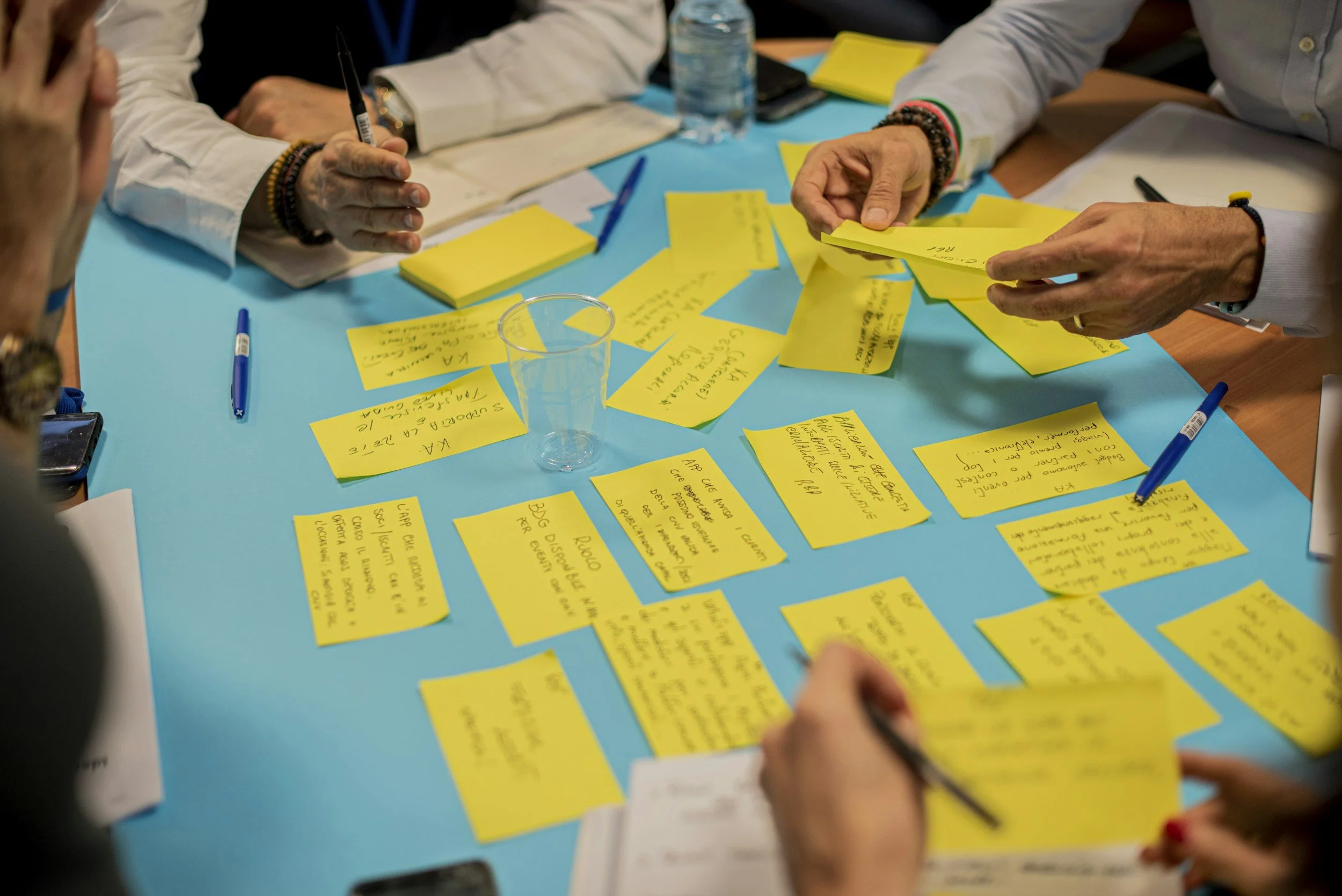
Choose the scale of change that fits
A focused brand-system update makes sense when the company’s core identity and market story still fit, but the way they are applied is strained. The work might clarify product relationships, improve templates, document practical design rules or make partner materials easier to use. The question is whether a well-defined change can remove the friction without asking the company to become someone else.
A broader rebrand deserves consideration when the underlying story or identity no longer represents the company’s direction. Perhaps the business has shifted beyond what its name, positioning or visual language can credibly express. Perhaps a collection of products has become a company, or the audience and category have changed enough that the old frame gets in the way. A rebrand is not simply a larger design package; it is a decision to reconsider foundational choices.
Between those sits a system-level evolution: a more substantial redesign of how the brand works across products, teams and channels, while retaining recognizable foundations. This can be appropriate when the core identity still has meaning but the company needs a more flexible, coherent structure to support its next stage.
These distinctions are a practical framework, not a rule that every company must follow. Internal consistency within a product or product family, and consistency in imagery and tone across a site and marketing, can help avoid confusion. Nielsen Norman Group also describes how design systems can give builders shared guidance and reduce redundant work. Extending that UX guidance to brand operations, my interpretation is that a useful brand system should help teams make coherent materials without treating every new asset as a fresh design problem. [1]
Make the decision testable
Before commissioning a broad identity project, write down what should become easier or clearer. For a focused system update, that could mean fewer rounds of revision on common assets, less time adapting approved materials, or clearer ownership of product messaging. For a deeper change, it might mean that target buyers can explain the company’s offer and product relationships more consistently after seeing the relevant materials.
These are possible measures, not promised outcomes. Establish a baseline before making changes and use the same method afterward. Revision loops and adaptation time can be tracked in the team’s workflow. Buyer comprehension can be checked with a consistent set of questions and an appropriate sample. Qualified inquiry rates may be worth monitoring only when the company has a usable baseline and can account for attribution limits and other changes. A movement in a metric alone does not prove the brand work caused it.

Clear structure helps people find their way through a growing offer.
Roll out the change where it matters first
Once the scope is clear, prioritize the places where the mismatch creates the most confusion or repeated effort. That might be the product overview, the sales presentation used across teams, or partner materials that currently require frequent repair. Build or revise the core guidance alongside those applications, so the system is tested in real use rather than left as a document no one consults.
Keep a record of decisions: what changed, what stayed, who owns the guidance and which materials still need attention. A staged rollout can help teams learn what works before updating every touchpoint at once. It also makes it easier to distinguish a foundational issue from a local one.
Growth does not automatically mean a company needs a new identity. It does mean the brand deserves a closer look when products, audiences and ways of working have changed. Start with the materials, clarify the business shift and choose a scope that answers the actual problem. If you are weighing a focused system update against a broader brand change, get in touch with Humind Creatives to discuss what the work needs to solve.
References
Rachel Krause, Nielsen Norman Group, “Maintain Consistency and Adhere to Standards (Usability Heuristic #4),” January 10, 2021. Supports the UX guidance on consistency and shared design-system guidance; the application to brand operations is Humind’s interpretation. Source.
GOV.UK, “Identify user needs,” publication date not displayed. Supports the planning principle of identifying users, tasks, frustrations and criteria before selecting a solution; this article applies it as a lens, not as B2B research. Source.
